

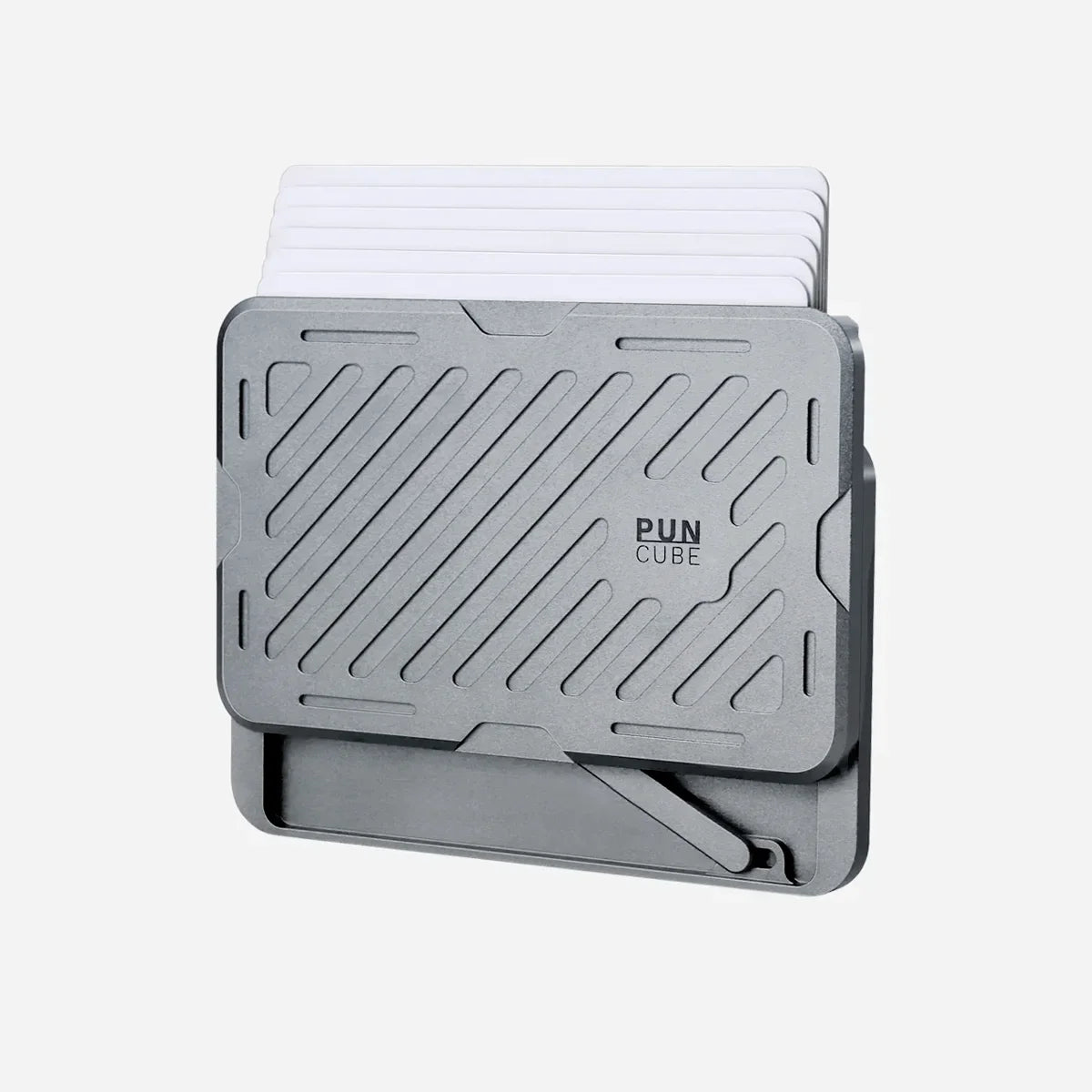
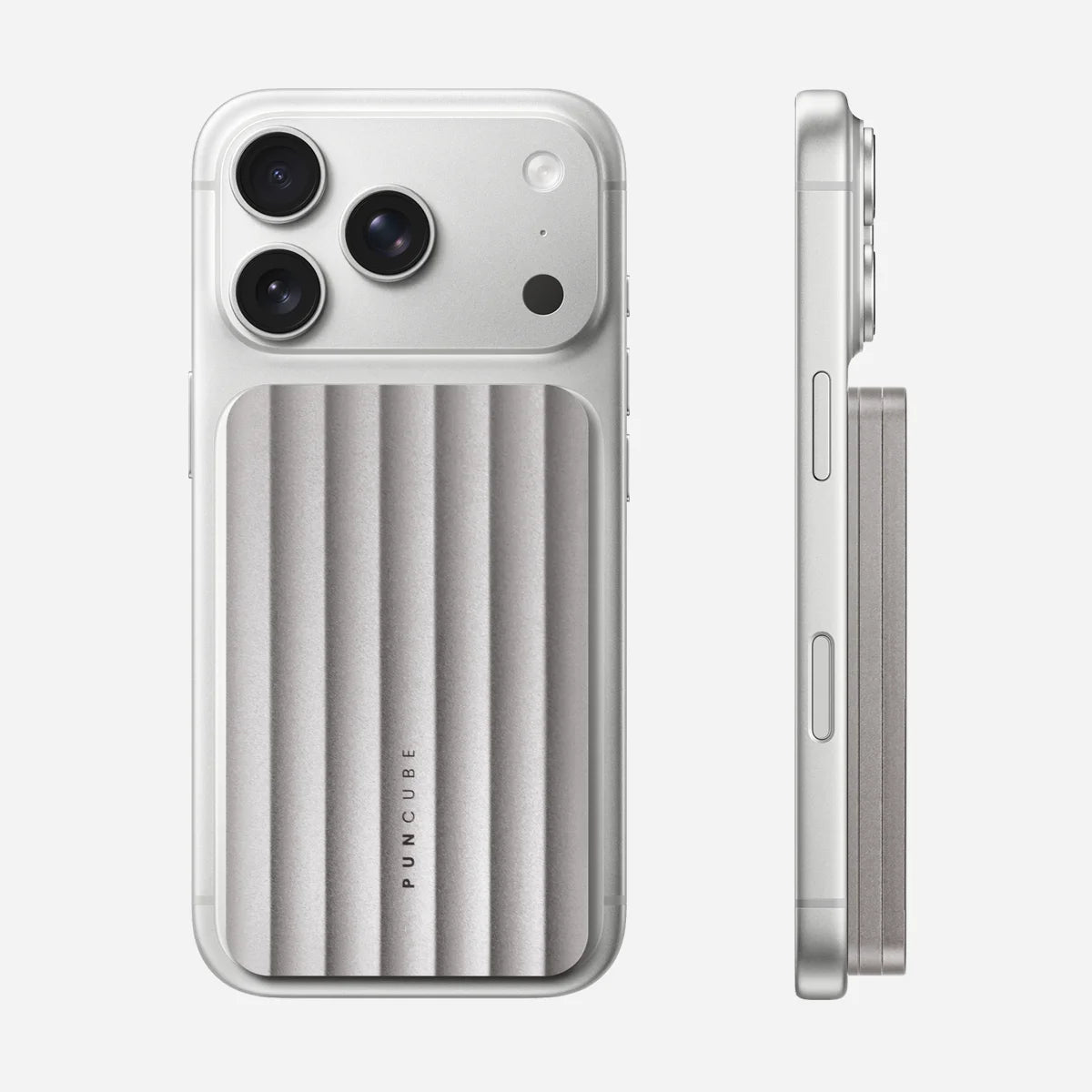
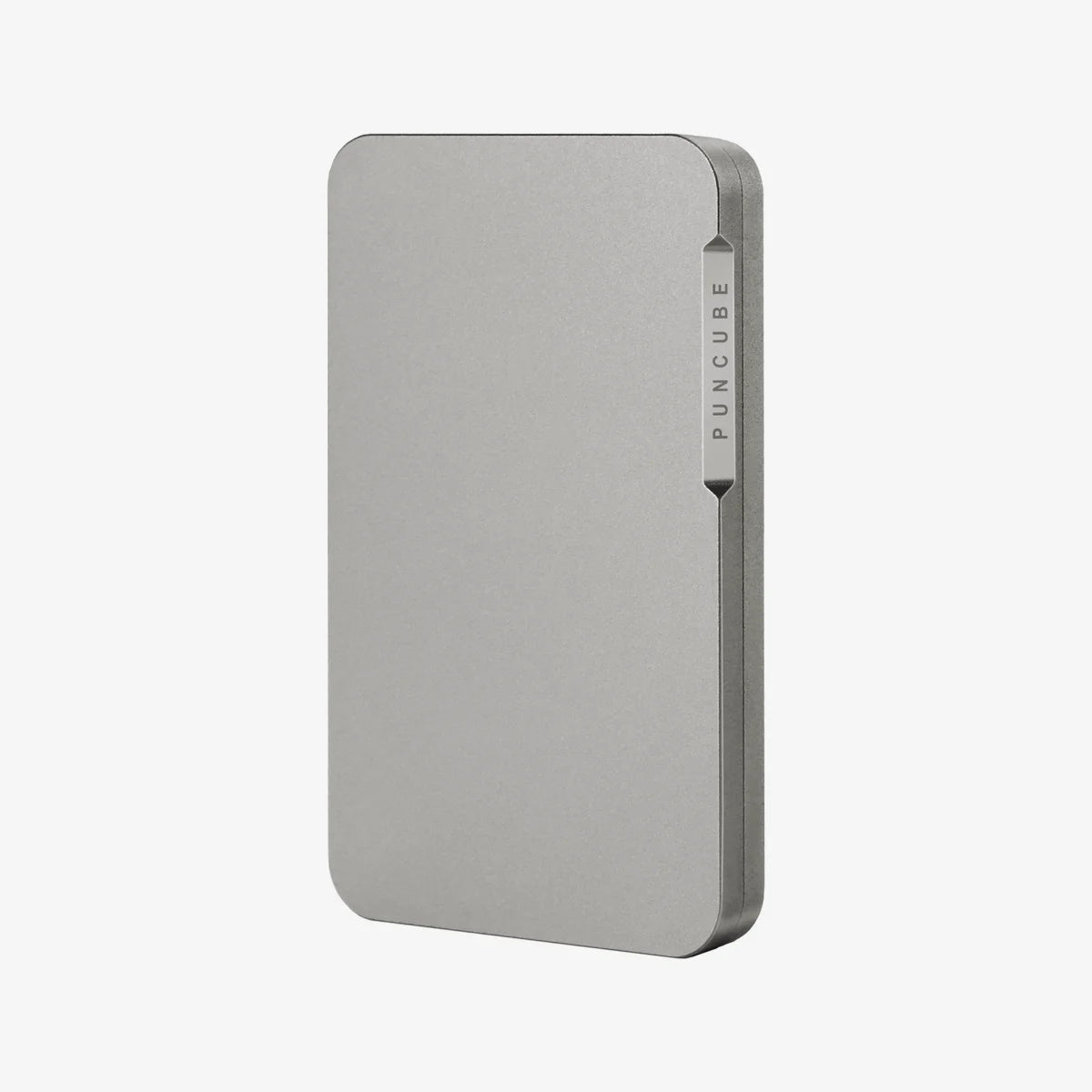
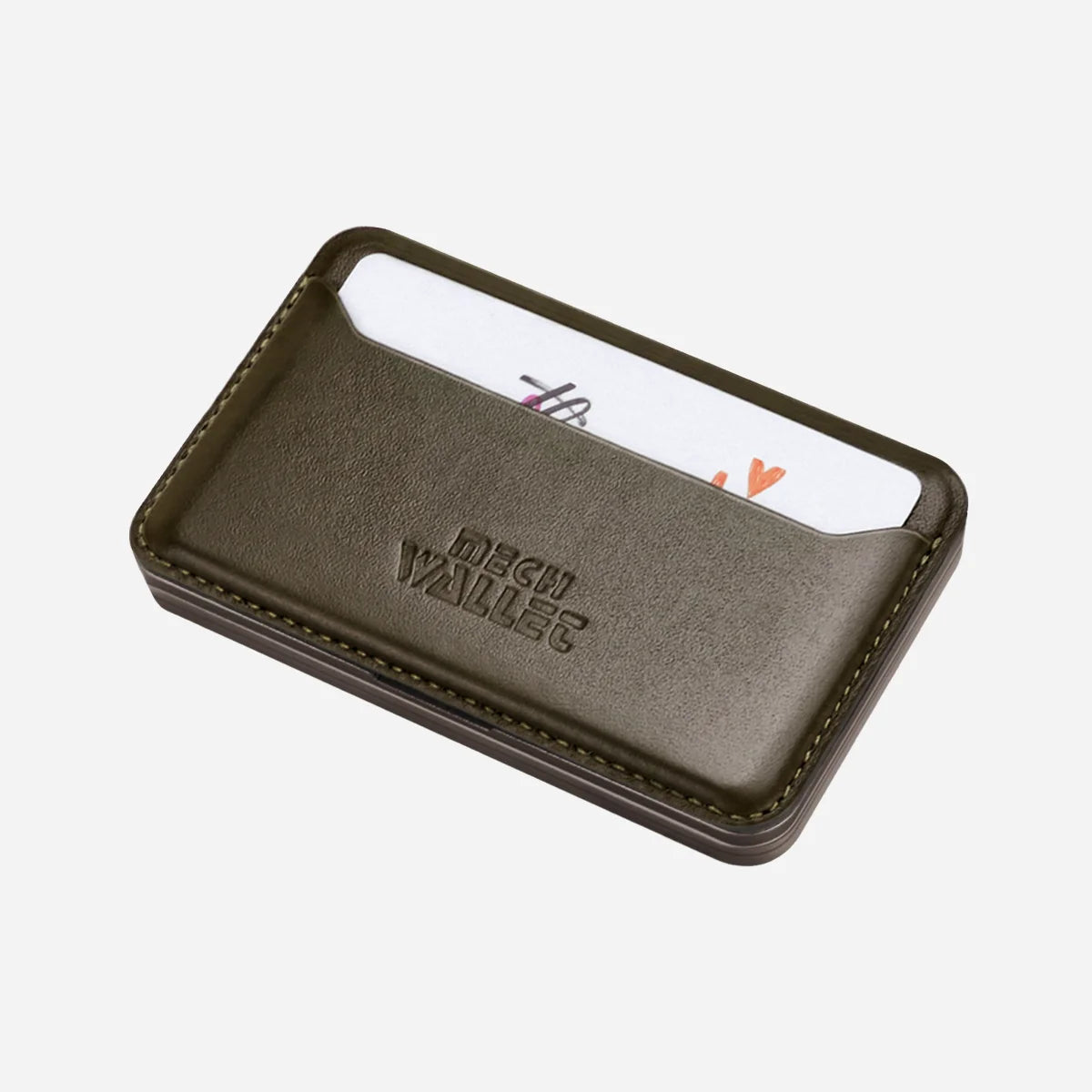
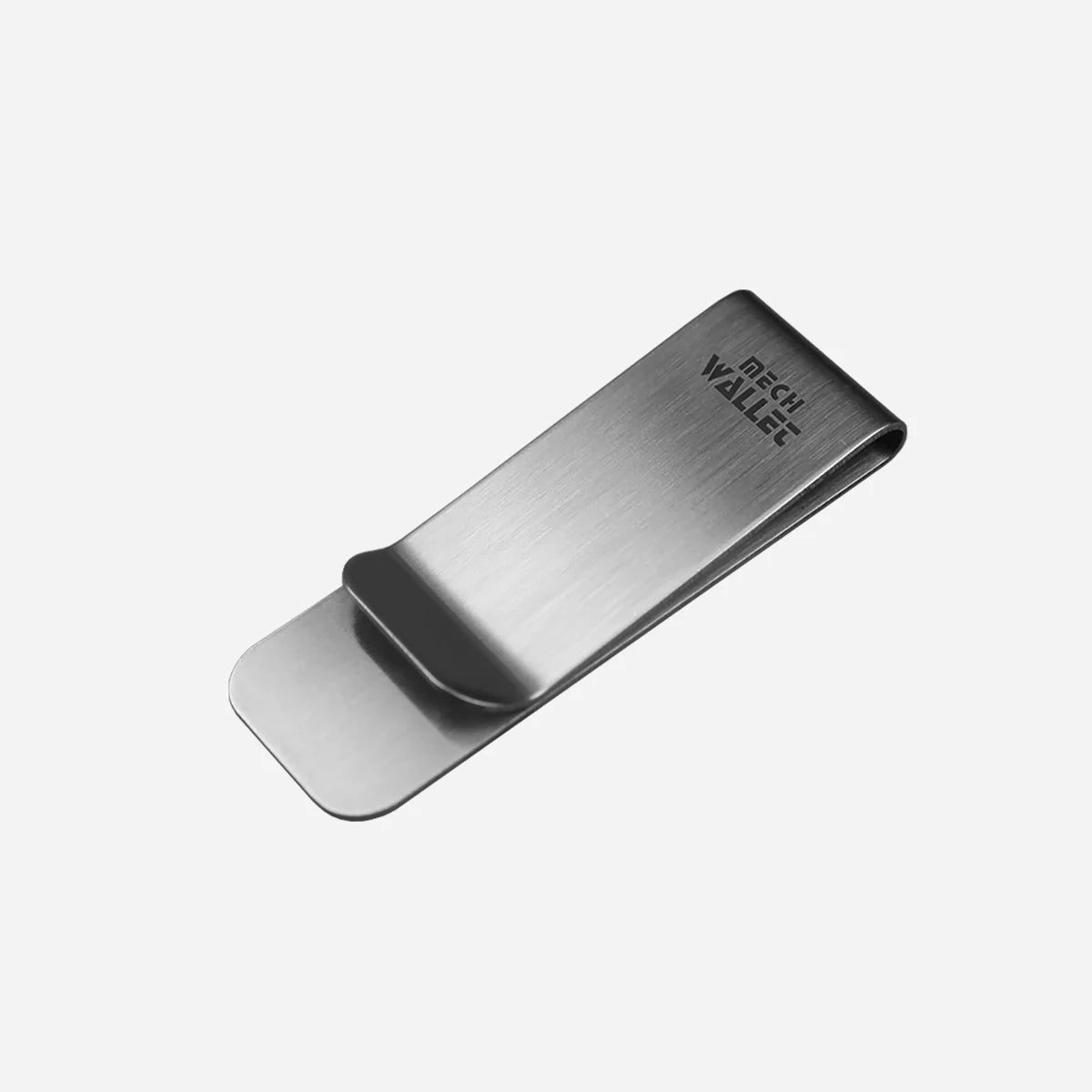
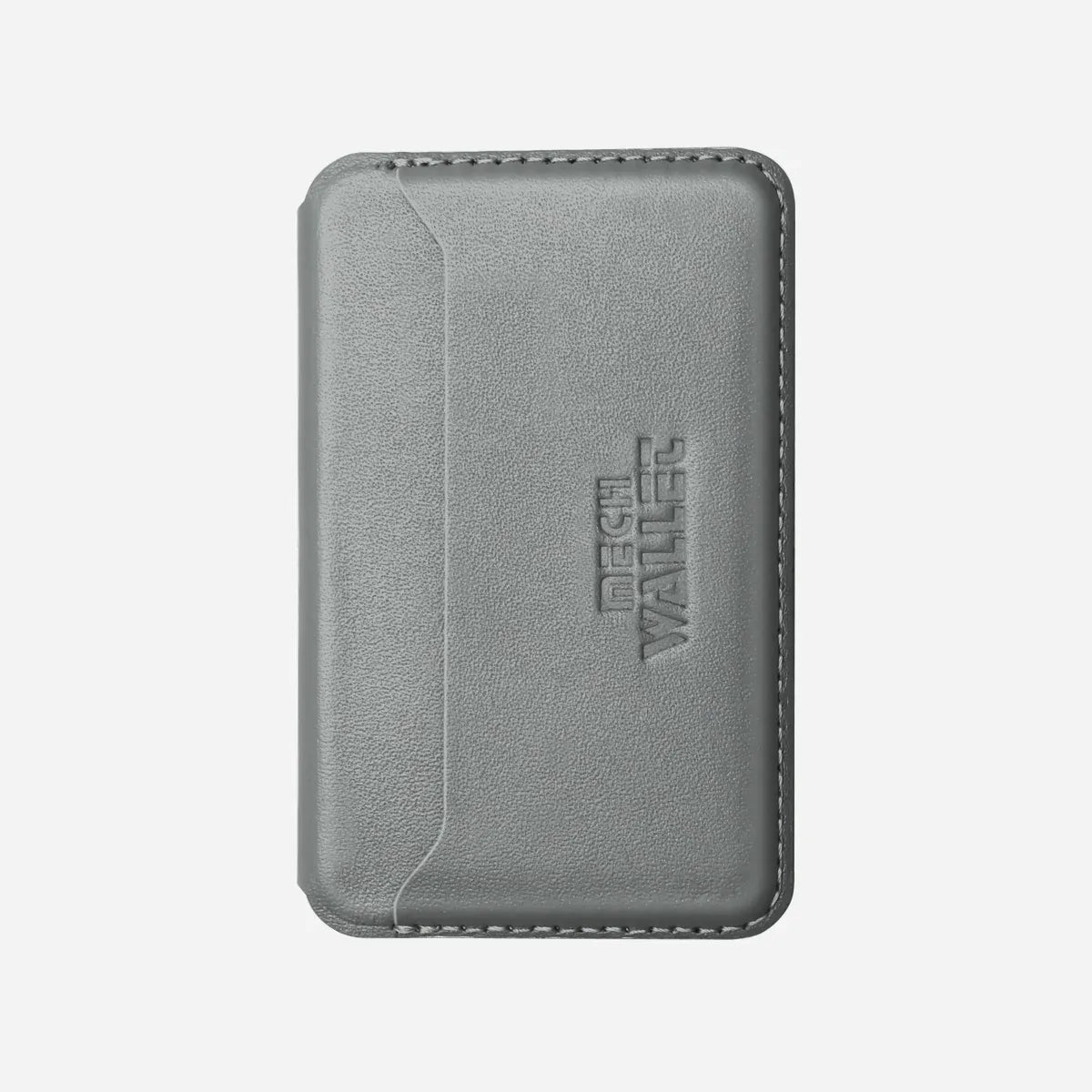
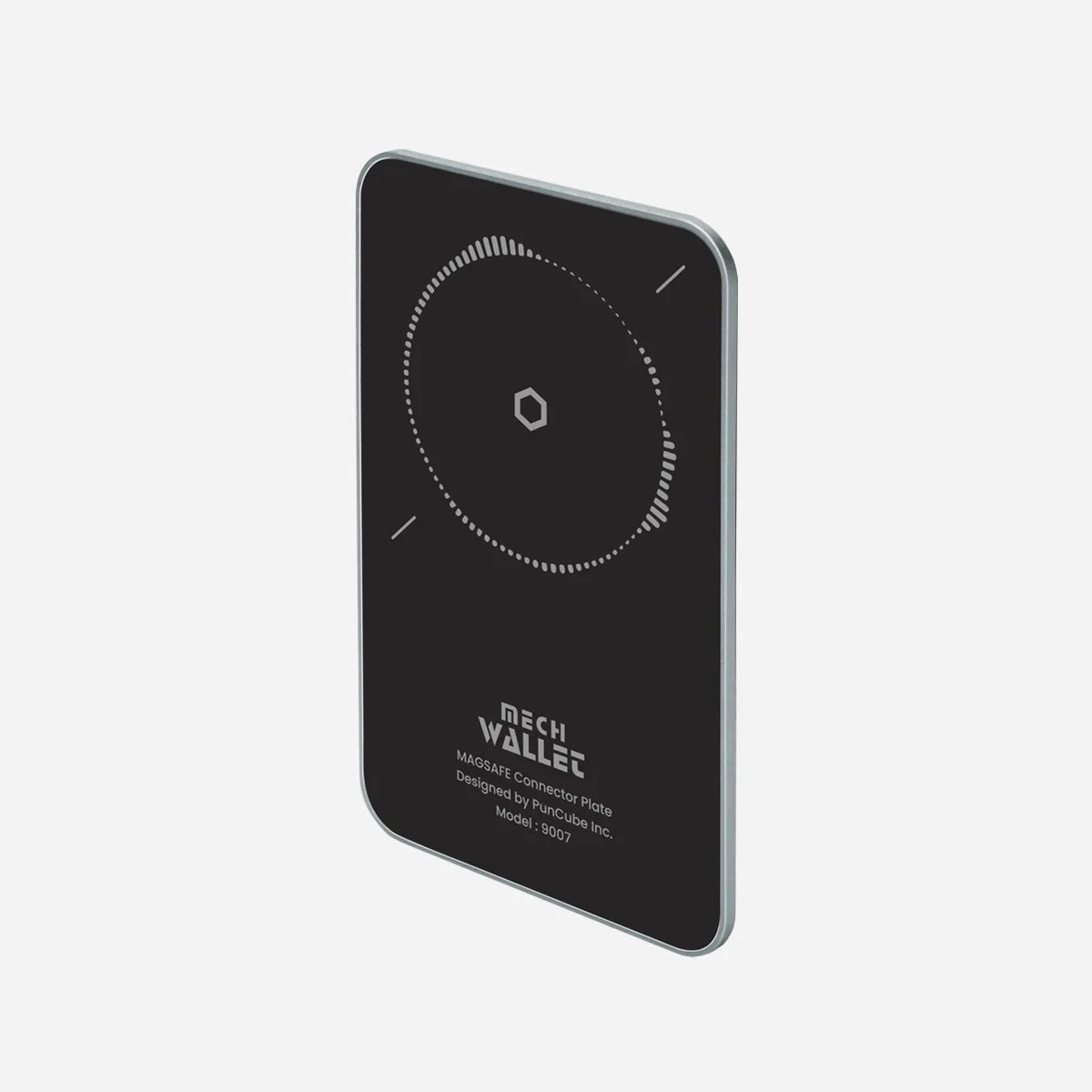
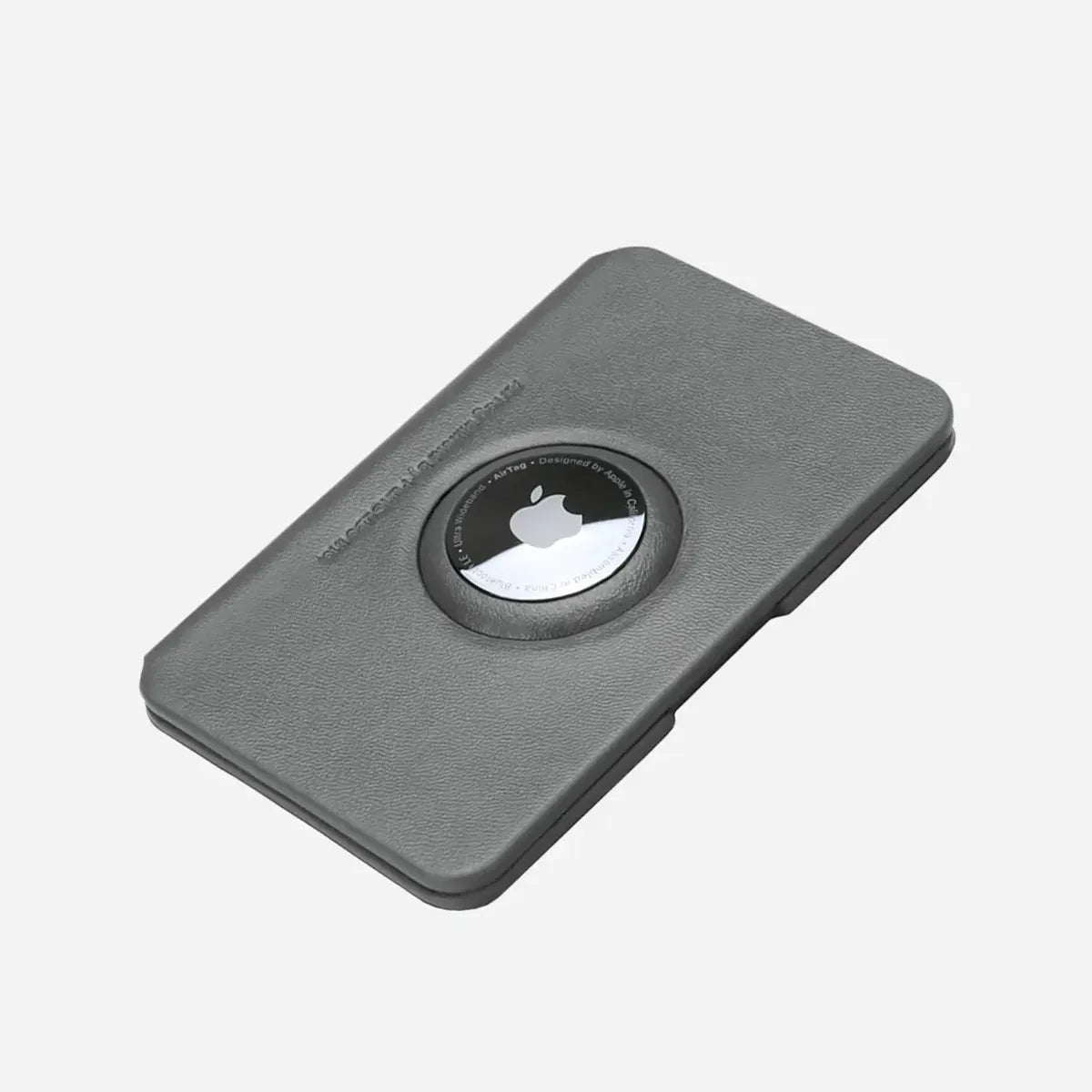

A contactless payment card, access card, or electronic ID stored inside the PunCube Mech Wallet's metal chamber must be removed before it can communicate with a reader. A plain photo ID without a contactless chip has no radio function to block. The PunCube Sentry Card uses Bluetooth, so it follows a different signal path. PunCube says Bluetooth is not blocked in the same way, while placement inside the metal wallet may reduce effective range.
RFID blocking only addresses radio communication while a compatible card is enclosed. It does not prevent online account theft, misuse of a card number, loss of the physical wallet, or fraud after a card has been removed.
RFID is a broad label
Wallet pages often use RFID as one short term, though the cards in a pocket may use different technologies. The practical question is whether a card needs radio communication with a nearby reader.
Contactless payment cards use the EMV contactless system. The curved contactless indicator on a payment card shows that it can make an EMV contactless payment. Access-control cards can use different frequencies and formats. HID, for example, publishes systems using legacy 125 kHz proximity technology and 13.56 MHz contactless smart-card technology.
An ID can be either case. A driver's license or membership card may be plain printed plastic with no contactless function. Other credentials include a chip or antenna. The issuer's documentation determines what the card can do.
Bluetooth trackers use active wireless technology in the 2.4 GHz band. They should not be described as another contactless payment card. The shape may be similar, but the signal and purpose differ.
What happens to a contactless payment card
Keep a contactless credit or debit card inside the closed PunCube metal chamber and it should not complete a normal tap transaction through that enclosure. Remove the card, place it at the payment terminal, and it can communicate normally if the card and terminal are working.
The shielding applies while the card is enclosed. It does not change the account, erase the chip, or deactivate contactless payment. It also does not protect a card number already exposed through a compromised merchant, phishing message, account takeover, or another non-radio route.
This boundary matters because the phrase RFID protection can sound much broader than the feature. The wallet changes a short-range radio interaction. Banks, payment networks, account controls, and the cardholder still handle the rest of payment security.
What happens to an office or building access card
An access card stored in the main metal chamber may fail to open a compatible reader because the wallet blocks the card-reader exchange. Remove the card and try it directly against the reader.
Access systems vary. HID lists both 125 kHz proximity cards and 13.56 MHz contactless smart cards. A result from one office badge cannot prove how every apartment key, hotel key, transit card, or workplace credential will behave.
The PunCube Bifold provides a dedicated external quick-access slot. Place the frequently tapped access card there when the goal is to use it without opening the metal chamber. Keep payment cards and other cards that you want enclosed in the main chamber.
This arrangement can help even when total capacity stays below nine cards. A five-card carry might keep four cards in the chamber and one office badge in the outer slot. The Bifold adds a separate radio-use position as well as storage.
What happens to an ID card
First identify the ID. A plain photo card has no RFID, NFC, or Bluetooth function, so shielding does not change how it is read visually. A barcode or magnetic stripe also uses a different reading method and must still be exposed to its matching scanner or reader.
An electronic ID or credential with a contactless chip may need to leave the metal chamber before scanning. Put it in the Bifold quick-access slot only when the issuer permits that use and the actual reader works with the card in that position.
Printed labels can be incomplete. Ask the card issuer or building administrator what technology the credential uses when its behavior matters for entry, identification, or travel.
Why Sentry Card needs separate treatment
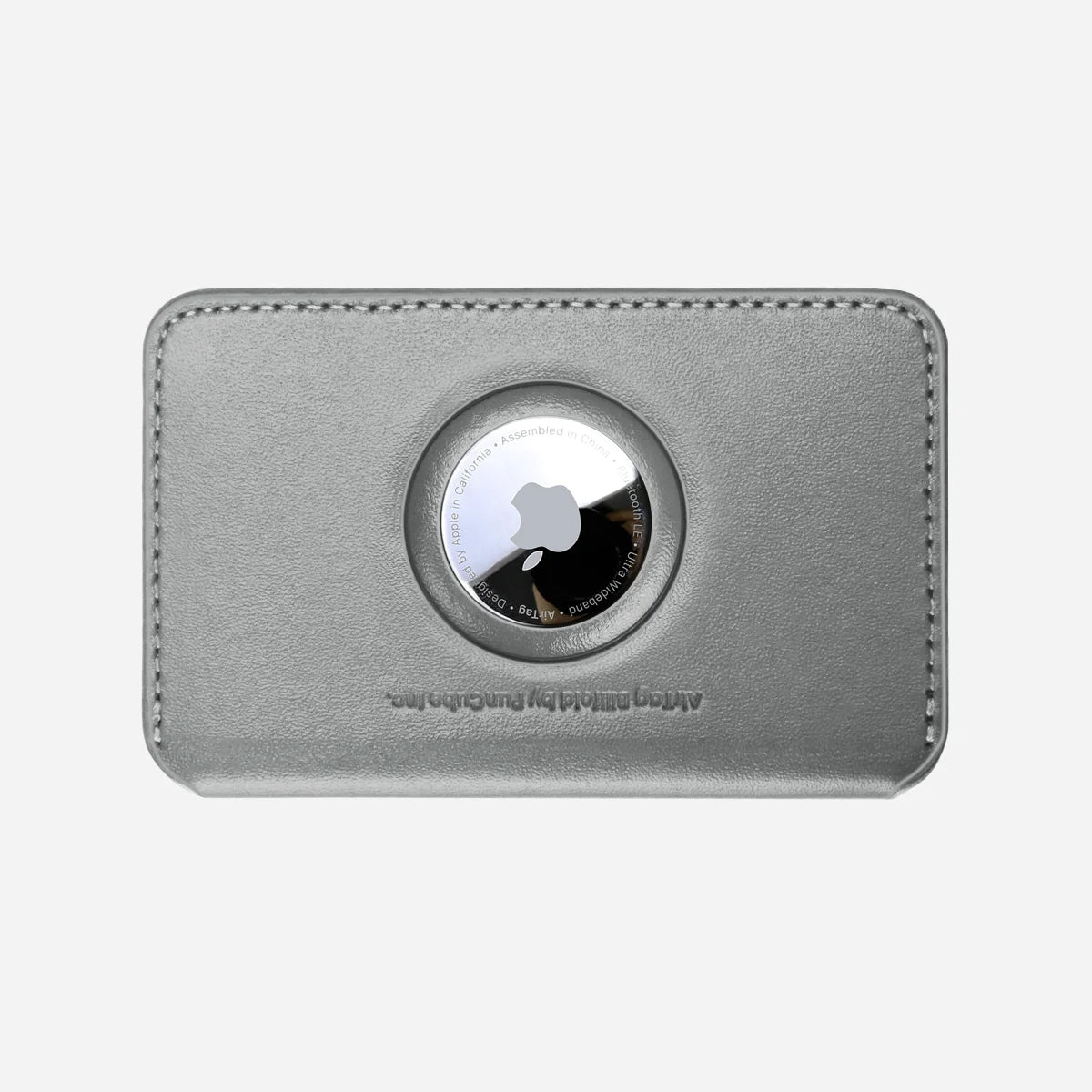
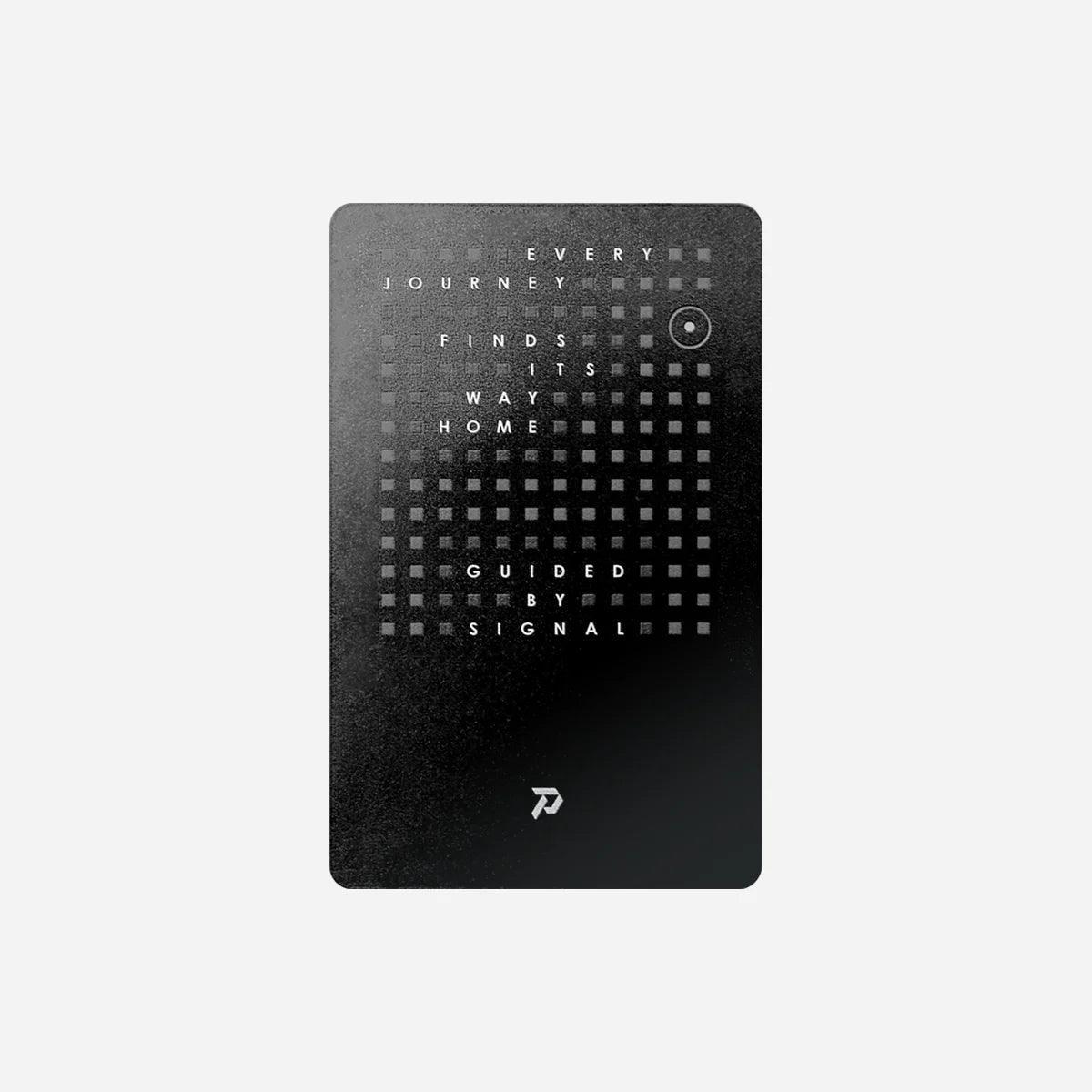
PunCube Sentry Card is a card-shaped tracker that uses Bluetooth. Bluetooth operates in the 2.4 GHz band, while payment and access cards commonly use other contactless systems. This is why a tracker should not be grouped with passive tap cards simply because it fits in a wallet slot.
PunCube's current Bifold FAQ says the Mech Wallet blocks RFID and NFC. It also says Sentry Card's Bluetooth connection is not blocked, though effective range may be reduced when the tracker sits inside the metal wallet.
Treat that statement as product guidance, not a promise of identical range in every placement. Metal, body position, phone location, nearby radio conditions, and the orientation of the card can affect a Bluetooth connection. An external Bifold slot may provide a more open position when reliable tracking range matters.
The PunCube accessories guide compares Sentry Card with the AirTag Module and explains the available storage positions. Add the dedicated RFID and tracker-signals guide here after that article is published.
A simple test you can repeat
Use the card's ordinary reader. A store terminal is appropriate for a payment card, while an office reader is appropriate for an access badge. Do not use an unknown scanning app as a substitute for the system that normally reads the card.
First confirm the card works outside the wallet. Place the card fully inside the Mech Wallet chamber, close the wallet, and present the same side and position to the reader. Remove the card and test it again. Repeat the sequence so a reader delay or failed first tap does not decide the result.
Record four things with the demonstration. Name the card category without exposing personal data, identify the type of reader, show where the card sits, and keep the reader distance consistent. Blur names, card numbers, barcodes, account details, and credential identifiers before publishing images or video.
This test describes one card, reader, wallet, and placement. It helps a buyer understand daily use. It does not certify the shielding across every frequency or prove protection from every form of theft.
Where each item should go
|
Item |
Main metal chamber |
External quick-access slot |
What to expect |
|---|---|---|---|
|
Contactless payment card |
Suitable for blocked storage |
Use only if you intentionally want tap access |
Remove from the chamber for payment |
|
Office or building access card |
Stored, but generally unavailable for tap use |
Useful for a frequently scanned credential |
Test with the actual access reader |
|
Plain photo ID |
Either position |
Useful when it must be shown often |
No radio function is involved |
|
Electronic contactless ID |
Stored, but radio reading may be blocked |
Useful when permitted and verified |
Check the issuer and test the real reader |
|
Sentry Card Bluetooth tracker |
Can be stored, with possible range reduction |
More open placement |
Bluetooth behavior differs from passive tap cards |
The external slot is available with the Bifold configuration. The standalone Mech Wallet keeps its cards inside the metal chamber.
What RFID blocking does not promise
RFID blocking does not guarantee that a payment account cannot be compromised. It only changes compatible radio communication while a card is enclosed. Online account compromise and card-number theft follow other paths. A stolen card may still be used after removal, and the wallet cannot locate itself.
The feature also says nothing about card retention or mechanical durability. Those are separate product questions that need their own evidence.
A more accurate product description stays narrow. The PunCube metal chamber blocks RFID and NFC communication for enclosed compatible cards. Cards that must tap should move to an appropriate external slot or leave the wallet. Bluetooth trackers need their own placement and range check.
Frequently asked questions
Can I tap a payment card through the PunCube Mech Wallet
No. Remove a contactless payment card from the main metal chamber before tapping it at a terminal.
Can an office badge work from the Bifold slot
The slot places the badge outside the main metal chamber and is designed for quick access. Access systems vary, so test the exact badge and reader before relying on through-wallet use.
Does RFID blocking affect a plain driver's license
A plain ID with no contactless chip has no radio function to block. Electronic IDs vary, so check the issuer's information.
Does RFID blocking disable a card
No. The enclosure interrupts communication while the card is inside. Removing the card restores its normal opportunity to communicate with a compatible reader.
Does the metal wallet block Wi-Fi or every wireless signal
PunCube describes the chamber as blocking RFID and NFC. This article does not claim that it blocks every wireless technology. Sentry Card uses Bluetooth and may experience reduced range inside the metal wallet.
For storage options, read the PunCube Bifold guide and Mech Wallet accessories guide. The current Bifold Wallet FAQ also explains the external slot and Sentry Card placement.

Leave a comment
This site is protected by hCaptcha and the hCaptcha Privacy Policy and Terms of Service apply.