

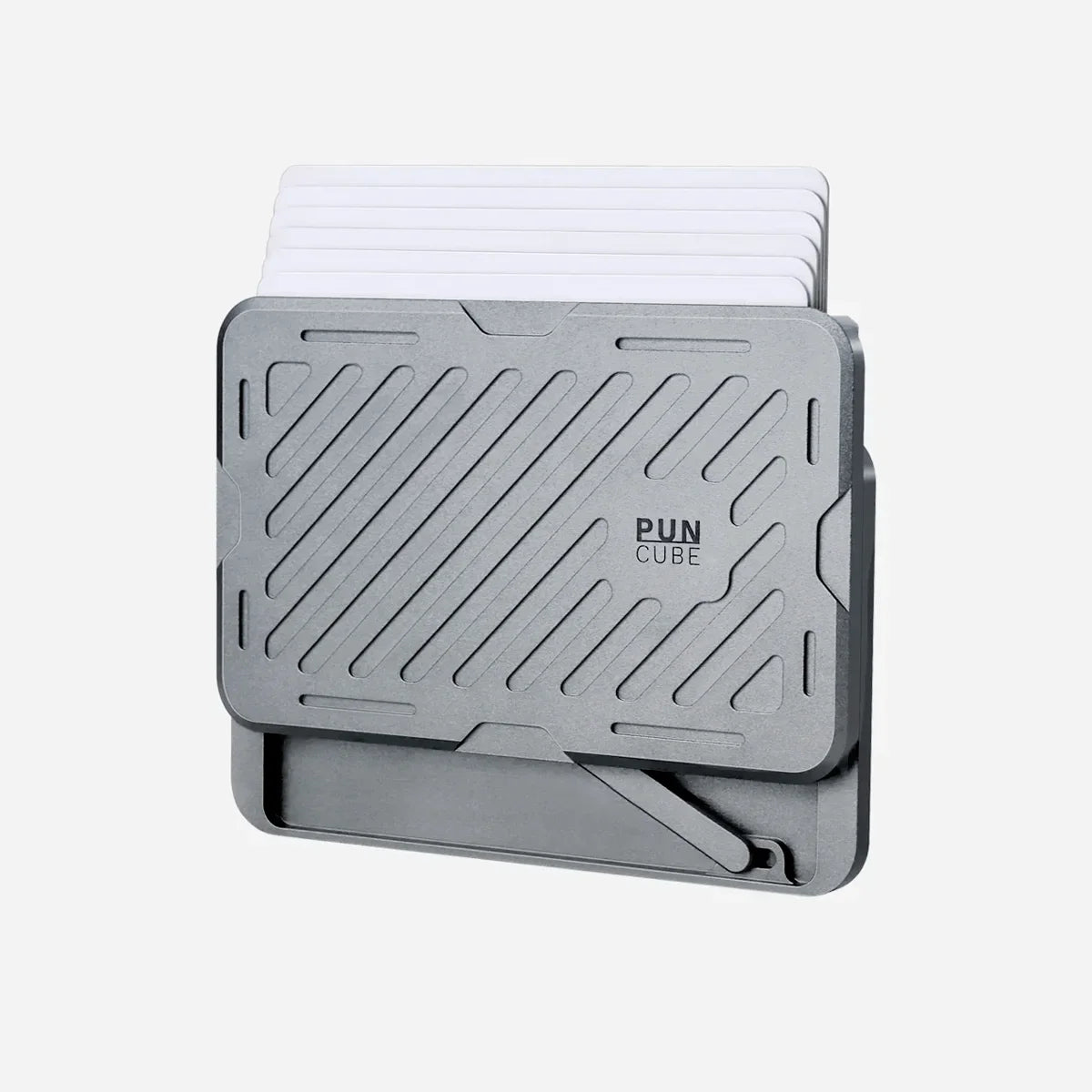
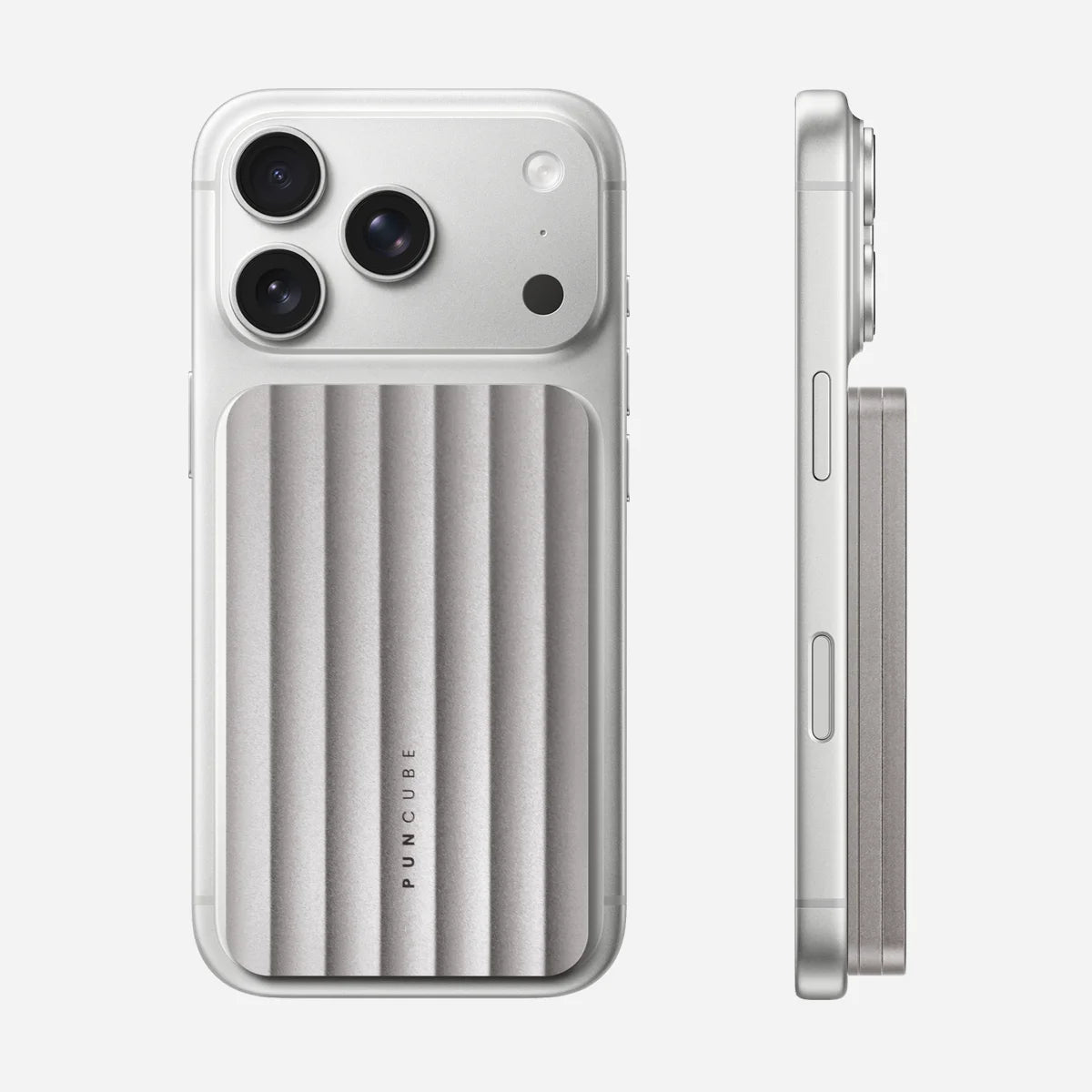
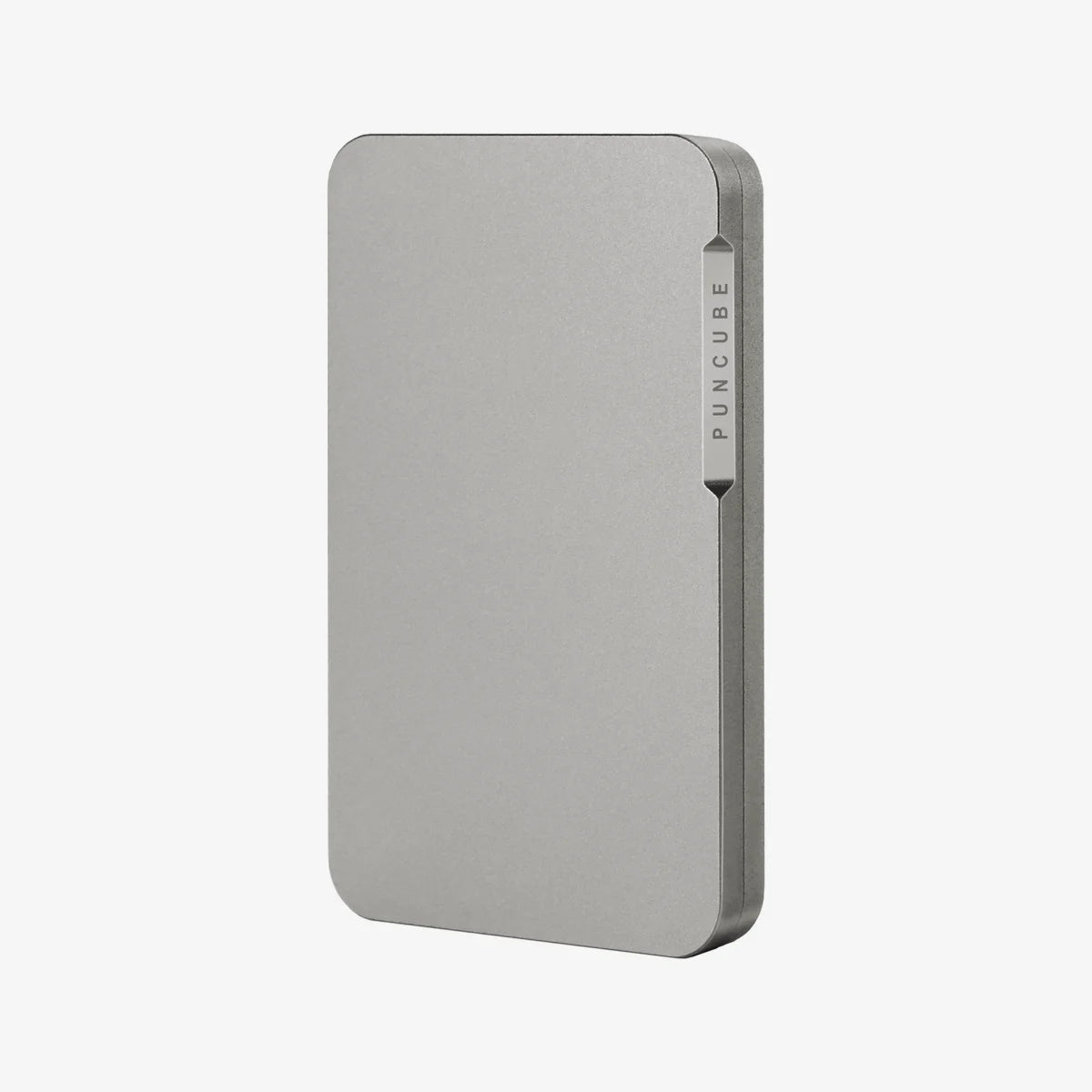
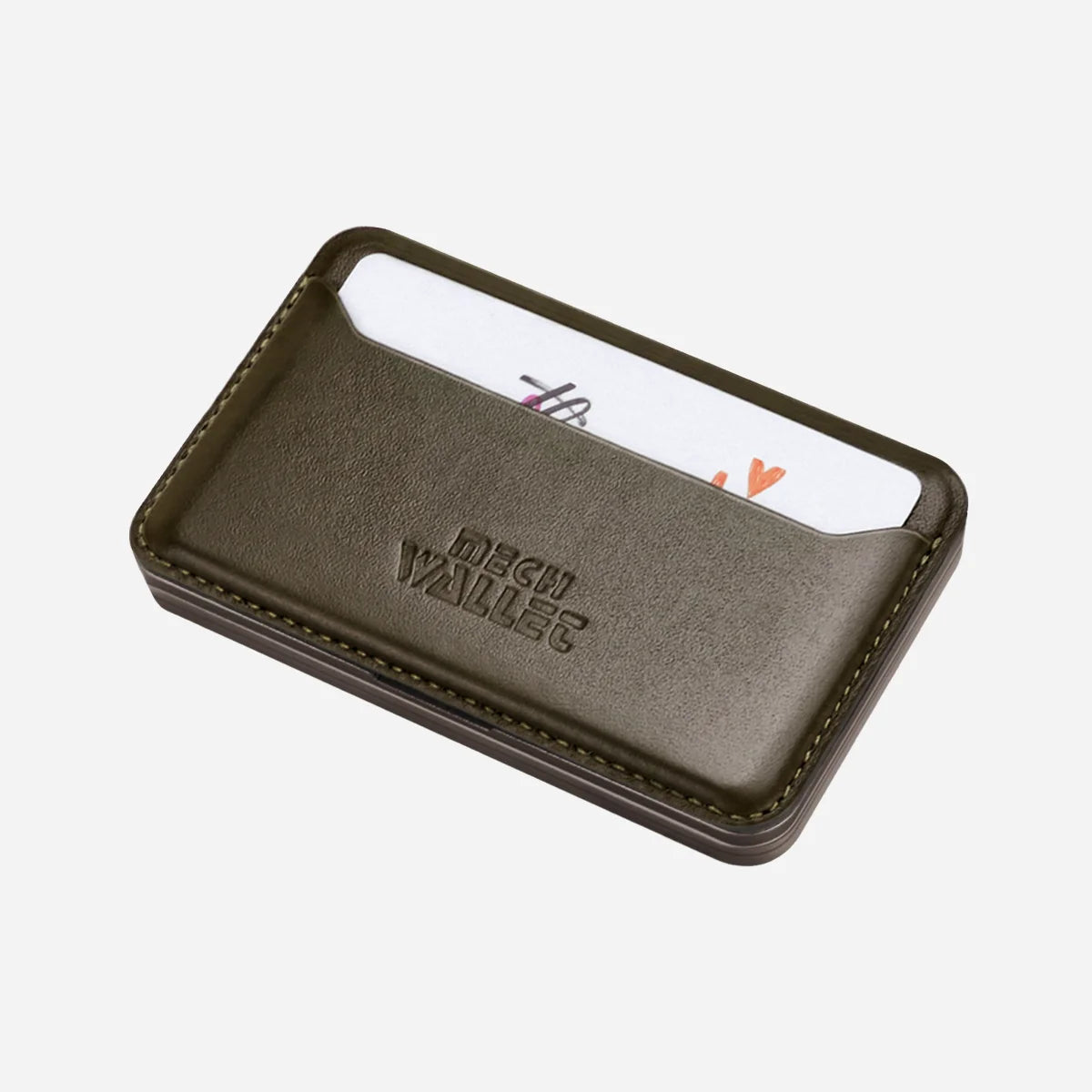
A front-pocket-friendly wallet fits the pocket after cards, cash, and accessories have been added. Its footprint must suit the pocket opening, its loaded shape must avoid a hard bulge, its weight must stay comfortable for the garment, and the cards must remain easy to reach.
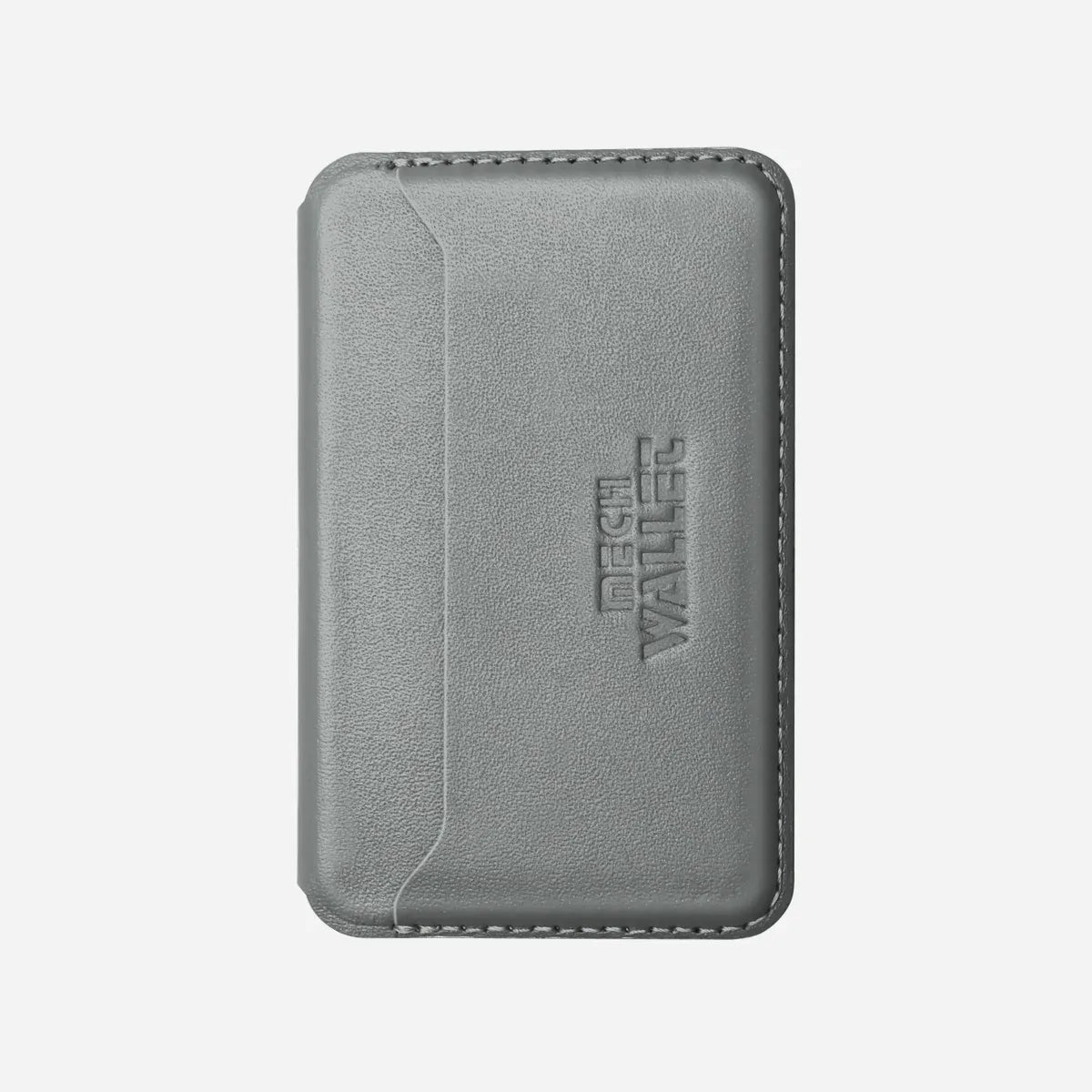
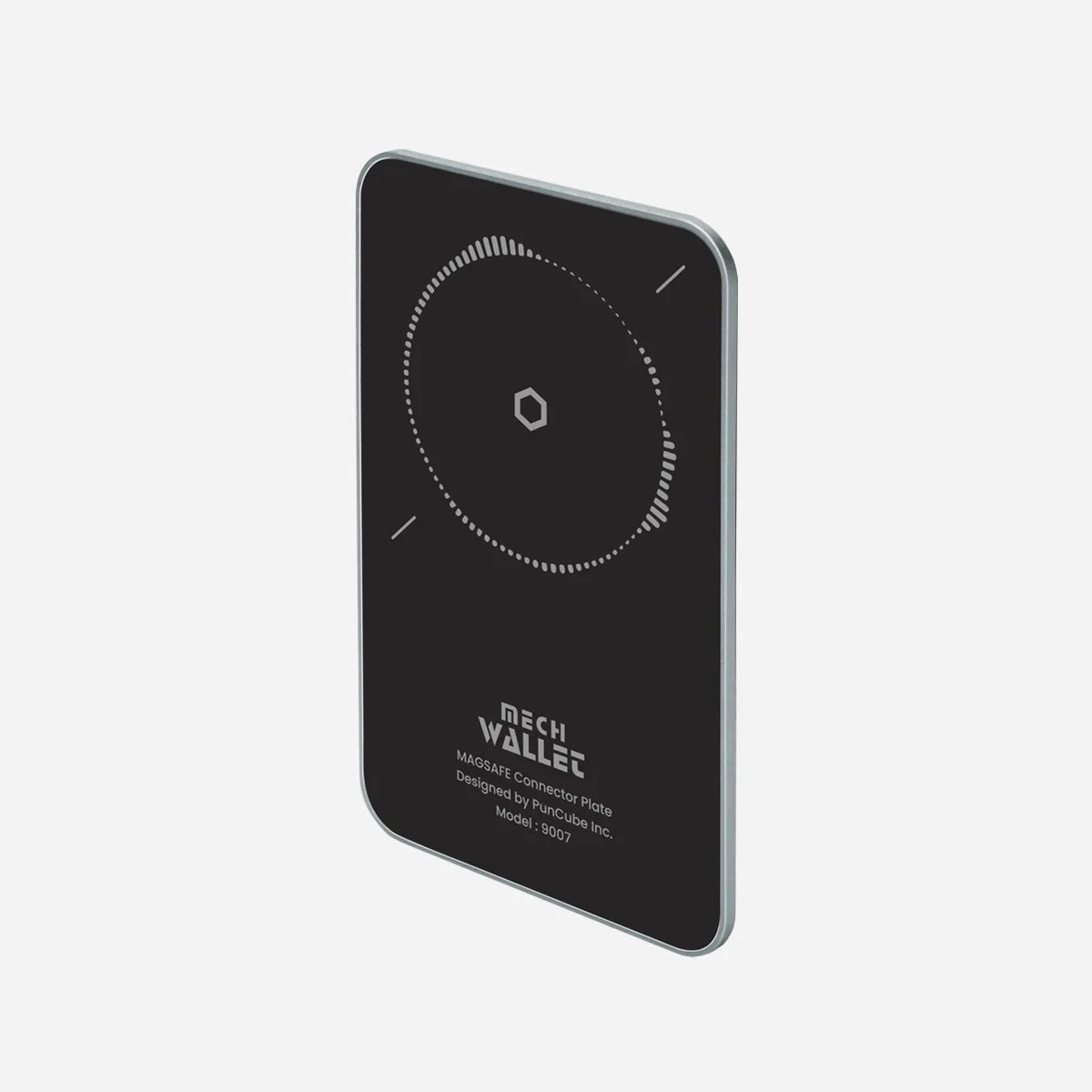
The standalone aluminum PunCube Mech Wallet measures 98 by 60 by 8 millimeters and weighs 53 grams before accessories. The complete empty Bifold configuration measures 98 by 60 by 12 millimeters and weighs 65 grams. Those two setups share the same length and width, yet their thickness, storage, and pocket feel differ. Start with the items you carry, then choose the smaller configuration that gives every item a clear place.
Start with the loaded wallet
An empty product measurement is useful because it gives every buyer the same baseline. It cannot describe the whole pocket experience by itself. Five plastic cards add weight. Folded notes can create a raised edge. Coins form a local bulge. A clip, tracker, or phone attachment changes the outer profile.
Use published empty dimensions to compare structures, then inspect the wallet with the intended load. A front-pocket claim should show both states. PunCube's base figure refers to the standalone aluminum Mech Wallet before accessories. The Bifold figure refers to the complete empty wallet with its leather storage attached.
|
Configuration |
Published empty size |
Published empty weight |
Intended load |
|---|---|---|---|
|
Standalone aluminum Mech Wallet |
98 × 60 × 8 mm |
53 g before accessories |
Up to 6 flat or 5 embossed cards |
|
Five-card base carry |
Same 98 × 60 × 8 mm metal body |
53 g plus the weight of the five cards |
A representative five-card daily stack |
|
Complete Bifold Wallet |
98 × 60 × 12 mm |
65 g |
Up to 9 cards, with storage for cash, coins, and a quick-access card |
A five-card carry adds the actual cards' weight to the 53-gram wallet. Card materials vary, and metal cards weigh more than ordinary plastic. A scale photo beside the exact sample will provide a result readers can reproduce.
Footprint decides whether the wallet enters the pocket easily
Length and width affect the first part of daily use. A compact rectangle can pass through a pocket opening without catching and can sit below the opening when the pocket is deep enough.
The PunCube body is 98 millimeters long and 60 millimeters wide. Compare that rectangle with a cardholder you already carry and with the actual pocket opening. Slim-cut trousers, work pants, running shorts, and a jacket can have very different pocket shapes even when their labeled size is the same.
A measurement cannot promise comfort across every garment. Sit, walk, climb stairs, and remove the loaded wallet while wearing the clothes that matter. Watch whether the top edge presses against the hip crease, whether the wallet turns sideways, and whether the pocket fabric carries the weight without sagging.
Thickness changes faster than length or width
The base Mech Wallet and complete Bifold have the same published 98 by 60 millimeter footprint. The base body is 8 millimeters thick before accessories. The complete empty Bifold is 12 millimeters thick.
Four millimeters can sound small on a specification table. In a front pocket, the difference is easy to feel because both structures use the same length and width. The comparison still applies only to the two empty configurations and does not describe their final loaded thickness.
The added Bifold section earns its space by providing a total capacity of up to nine cards, cash and coin storage, and an external quick-access slot. A person carrying five cards and little cash may have no job for that extra layer. A person carrying eight cards, several bills, and an office badge may find the 12-millimeter structure more orderly than attaching several separate holders.
Thickness should therefore be read beside function. The smallest number wins only when the smaller wallet still holds the real carry without forcing, stacking loose items around it, or making access awkward.
Weight belongs to the entire pocket setup
The 53-gram base and 65-gram Bifold figures describe empty configurations. The difference is 12 grams before anything is loaded. Cards, notes, coins, keys, and a phone in the same pocket add their own weight.
Pocket fabric matters too. A structured trouser pocket may hold the same wallet more securely than lightweight athletic shorts. A clipped or attached object can also concentrate weight on one area of fabric.
For a useful product photo, weigh the exact wallet and contents shown. List whether the cards are plastic or metal and whether cash or coins are included. That evidence gives the reader a real setup instead of an optimistic empty figure presented as everyday carry.
Card count affects both fit and access
PunCube rates the main chamber for six flat cards or five embossed cards. Raised characters create high points in the stack, so an embossed load reaches its limit sooner. Sleeves, tracker cards, and unusually thick metal cards should also be judged by their actual profile.
A five-card base carry sits near the center of the Mech Wallet's intended use. It leaves each daily card in the mechanical stack and avoids adding another storage layer. The side drive raises the cards in a staggered fan so they can be selected without removing the entire stack.
Seven to nine cards point toward Bifold. It keeps the main chamber's mechanical access and distributes the remaining items through the attached storage. The complete configuration is rated for nine cards in total. The metal chamber keeps its standard six-flat or five-embossed-card limit.
<!-- Add the verified retained URLs for the five-card and capacity guides here after those drafts are published. Current guessed slugs returned 404 during editorial checking. -->
Fast access is part of front-pocket fit
A wallet can be physically small and still feel cumbersome if every payment requires two hands, a full stack removal, or a search through mixed compartments. Access should be tested in the same conditions as fit.
Load the frequently used cards in a consistent order. Operate the drive while standing, then repeat while seated if that reflects normal use. Select one card, return it, and check that the stack stays aligned. Include the intended five or six cards in this test.
Contactless cards inside the metal chamber must be removed before tapping because the enclosure blocks RFID and NFC communication. A badge that needs to scan through the wallet belongs in the Bifold's external quick-access slot. This is a workflow difference, not only a capacity difference.
Base wallet or Bifold for a front pocket
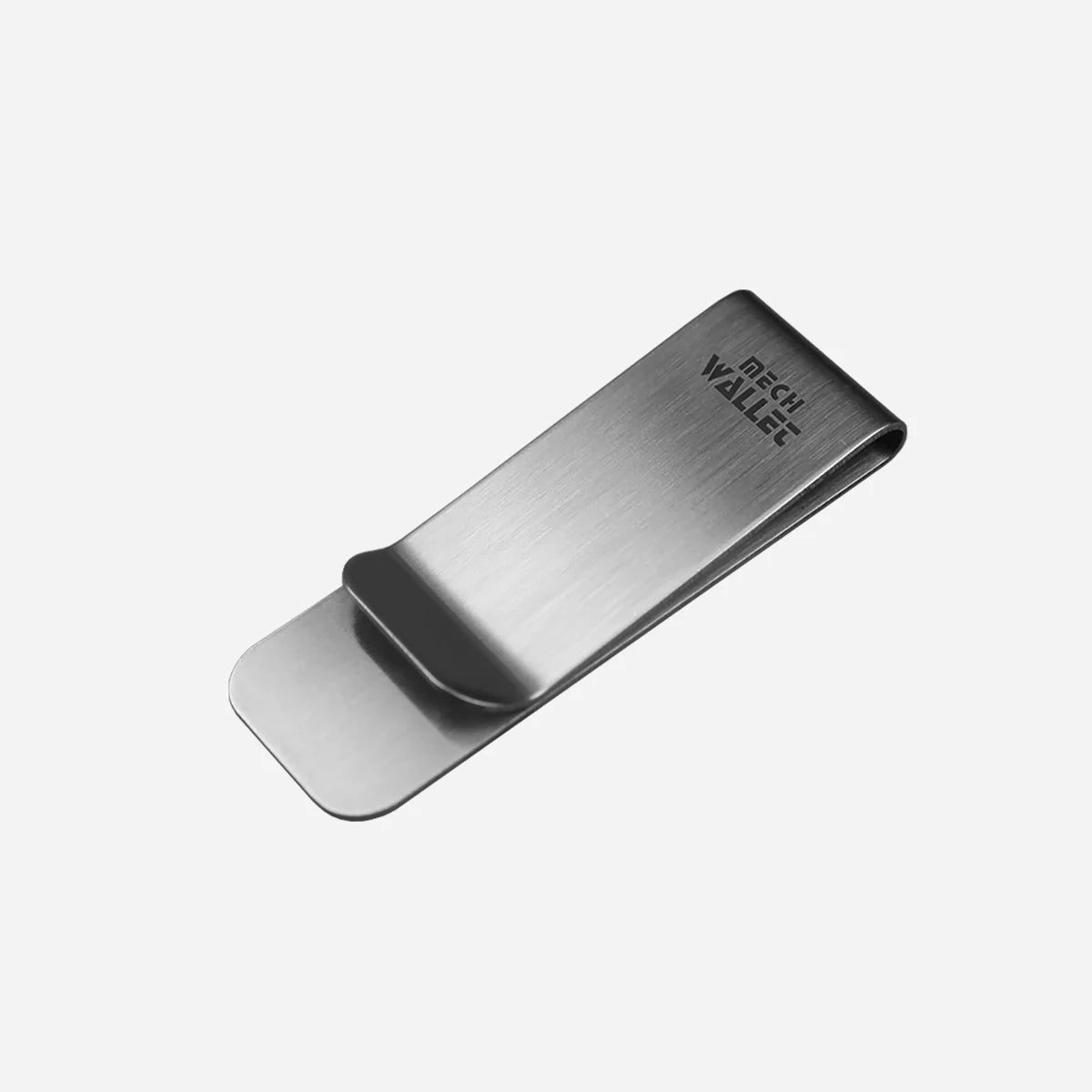
Choose the standalone Mech Wallet when the normal load stays within six flat or five embossed cards and cash is limited to a few folded notes. It has the thinner and lighter published empty body. The included Money Clip can handle a small cash carry, though PunCube has not published a separate complete thickness or weight for the base wallet with the clip installed.
Choose the complete Bifold Wallet when seven to nine cards, regular cash, a few coins, or an external tap-ready slot justify the added 4 millimeters and 12 grams. Each added part should have a regular job.
Choose a different wallet structure when more than nine cards, many receipts, unfolded currency, or a flexible body matters more than compact mechanical access. Front-pocket friendly is a relationship between the wallet, the load, and the clothing. It is not a universal product label.
A five-minute pocket test
Place one month of regularly used cards on a table. Remove loyalty cards that already live reliably on the phone. Separate embossed, sleeved, and metal cards from standard flat plastic cards. Add the ordinary amount of cash and coins.
Load the intended configuration without forcing it. Put it in the usual front pocket and spend several minutes standing, sitting, walking, and retrieving one card. Repeat with the second configuration if deciding between the base wallet and Bifold.
Check four results. The wallet should enter and leave the pocket cleanly, stay in a stable orientation, avoid an uncomfortable pressure point, and give quick access to the needed card. A setup that passes those checks in the buyer's actual clothes has stronger evidence than a generic front-pocket label.
Frequently asked questions
Is the PunCube Mech Wallet 8 millimeters thick with accessories
No. Eight millimeters is the published thickness of the standalone aluminum Mech Wallet before accessories. Use the measurement for the complete configuration when adding Bifold or MagSafe.
How thick is the complete Bifold Wallet
The complete empty Bifold configuration is 12 millimeters thick. It keeps the base wallet's 98 by 60 millimeter footprint and weighs 65 grams before contents.
Is five cards a good front-pocket load
Five standard cards fit within the Mech Wallet's published capacity and leave no need for added card storage. Embossing, sleeves, and unusual card thickness can change the fit.
Does a smaller empty wallet always feel better in a pocket
No. Loaded shape, weight distribution, access, pocket construction, and body movement all affect the result. Compare complete setups in the clothes you use.
Which PunCube setup fits seven to nine cards
The Bifold configuration is rated for up to nine cards in total. It also adds cash and coin storage and an external quick-access slot.
Compare the PunCube Mech Wallet, the Bifold Wallet, and the PunCube accessories overview before choosing a front-pocket setup.

Leave a comment
This site is protected by hCaptcha and the hCaptcha Privacy Policy and Terms of Service apply.